


 Home
HomeTurning Bamboo Waste into Value Bamboo Fine Powder Making Machine
Bamboo Fine Powder Making Machine – Core Equipment for Residue Utilization
Bamboo processing creates a big volume of leftovers. These include short bits, node parts, bad strips, sawdust, side cuts, and flawed half-done items. Such materials used to count as cheap waste. Now, with proper tools, they turn into bamboo fine powder — an even, large-area stuff used a lot in mixes, shaped goods, incense, charcoal, cosmetics, and more fields.
The Bamboo Fine Powder Making Machine acts as the key tool. It changes these leftovers into useful powder for sale. The powder has set grain size (often 60–400 mesh).
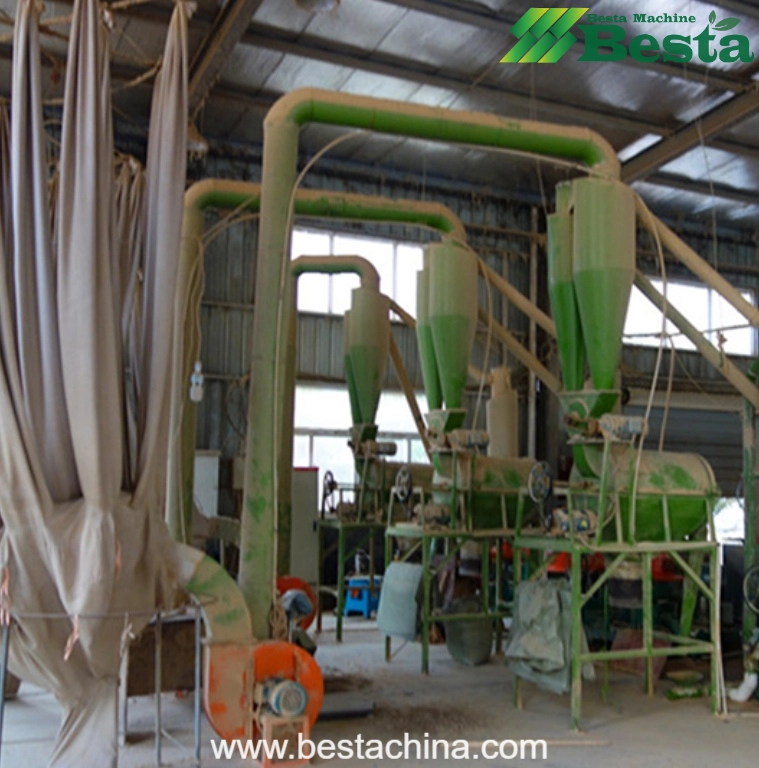
Two Main Processing Stages in Bamboo Fine Powder Making Machine
Coarse Pulverizing – First Reduction Step
The work starts with a strong hammer-style crusher (FS series):
- FS-50-40 Motor power: 30 kW Approximate dimensions: 2200 × 1300 × 1100 mm Approximate weight: 800 kg
- FS-50-50 Motor power: 37 kW Approximate dimensions: 2200 × 1400 × 1100 mm Approximate weight: 1000 kg
These units use fast-turn hammers and set hole screens to break the input stuff.
Output samples:
- With 15 mm screen: 3.0–3.5 tons per hour (based on type)
- With 7 mm screen (for big input bits): 1.5–1.75 tons per hour
The result from this part is rough powder or bits (often 1–5 mm). It feeds the next grind unit.
Fine Grinding & Precision Classification
The next part uses the fine powder line (often BMFJ-4G or BMFJ-6G setup):
- Main motor power: 30 kW (BMFJ-4G) or 37 kW (BMFJ-6G)
- Usual output: 90–250 kg/h (4G) or 110–300 kg/h (6G) at 60–400 mesh
- Full line has: main grinding mill, automatic feeder, internal classifier, vibrating screen, cyclone separator, rotary discharge valve, high-pressure blower, pulse bag dust collector
This part cuts grain size from rough bits to fine or very fine powder. It keeps tight grain spread.
Detailed Working Principle of Bamboo Fine Powder Making Machine
Impact, Shear and Airflow Grinding Mechanism
In the main grind room of the Bamboo Fine Powder Making Machine, a few forces work at once:
- Fast-turn blades hit the stuff
- Stuff grains bump into each other and the room side
- Cut forces come from moving and still parts
- Strong air flow from the blower moves grains and adds hits
This mix of forces breaks the stringy build of bamboo well.
Built-in Air Classifier – Key to Particle Size Control
The unit has an inside moving air sorter (spin type). Air flow lifts fine grains up through the sorter wheel. Bigger grains get pushed out by spin force and go back to the grind area for more work.
This loop sort setup lets the machine make steady fine level. It skips outside sifting for most uses.
Material Flow Path in Bamboo Fine Powder Making Machine
From Hopper to Final Discharge
- Bamboo residues → coarse pulverizer (FS-50 series)
- Coarse powder → pneumatic conveying pipe → fine grinding mill feeder
- Screw feeder → controlled feeding into grinding chamber
- Grinding + classification loop (multiple passes inside the mill)
- Qualified fine powder → airflow → cyclone separator
- Cyclone discharge → rotary valve → vibrating screen (final check)
- Oversized particles from screen → returned to mill
- Finished powder → bagging point or silo
- Dust-laden air → pulse bag filter → clean air exhaust + recovered fine powder
This steady, shut-circle path cuts stuff loss. It also keeps the work space tidy.
Adjustable Parameters of Bamboo Fine Powder Making Machine
Factors That Directly Influence Output Fineness and Capacity
- Feed rate — set by feeder speed; more feed cuts fine level
- Classifier wheel speed — faster turn makes finer powder
- Airflow volume — changed by blower door; it sways carry power and sort work
- Screen size in coarse stage — 7 mm vs 15 mm shifts the load on the fine mill
- Number of hammers/blades and their arrangement — influences impact intensity
- Vibrating screen mesh — final safeguard for maximum particle size
Skilled workers set these parts based on goal mesh (60 mesh rough / 400 mesh very fine) and needed hourly yield.
Powder Quality Characteristics Controlled by Bamboo Fine Powder Making Machine
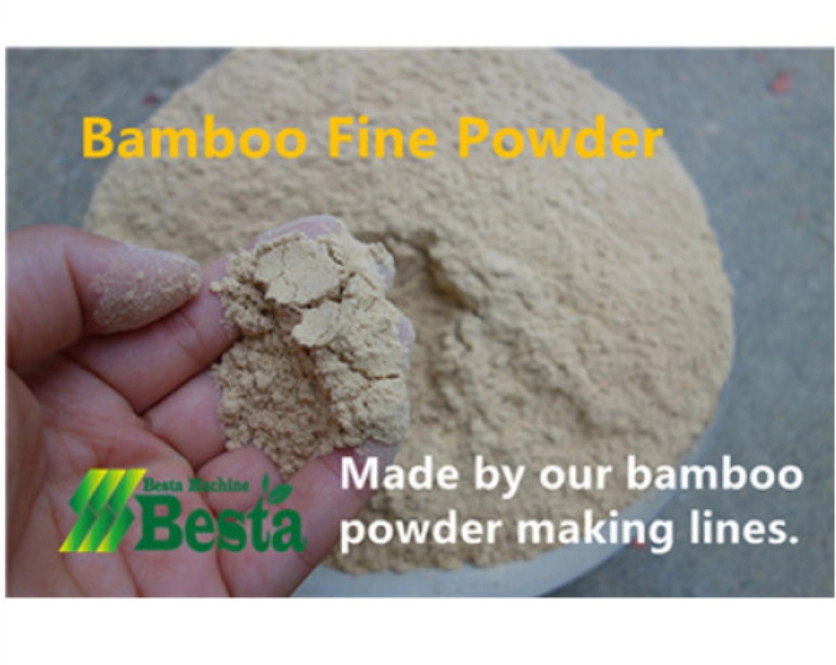
Important Properties Affected by Machine Settings
- Particle size distribution — tight spread gives better work in mixes and shaping
- Bulk density — finer powder often has less bulk weight
- Flowability — affects how easy powder moves, blends or shapes
- Surface smoothness — fast hit grinding makes fairly even grains
- Residual fiber length — shorter fibers help spread in mixes
- Dust content — cut by good bag filter
Fields like different blends of these traits. The Bamboo Fine Powder Making Machine lets easy tweaks to fit exact needs.
Why Choose an Integrated Bamboo Fine Powder Making Machine System?
Main Competitive Advantages
- Changes cheap or no-value waste into a sellable item
- Broad set fine range (60 mesh rough to 400 mesh very fine)
- Steady, auto run with low worker need
- Shut-loop dust catch keeps work area clean and gets back stuff
- Part design lets grow from one line to many lines
- High yield next to set power (key for power costs)
Factories with this setup often see return times of 12–24 months. This comes from powder sales and less waste dump costs.
Who Benefits Most from Bamboo Fine Powder Making Machine?
Typical User Profiles
- Medium and large bamboo processing factories (chopsticks, skewers, toothpicks, mats, flooring)
- WPC, bioplastic, and molded fiber product manufacturers
- Incense and charcoal production companies
- Natural cosmetic and personal care ingredient suppliers
- Biomass energy plants seeking high-quality raw material
- Enterprises in regions with strict waste disposal regulations or incentives for circular economy projects
Configuration Choices for Bamboo Fine Powder Making Machine
Single vs Multiple Lines
- Single line — fits small to medium factories, 100–300 kg/h output, 1 operator
- Multiple lines — 2–5 lines in parallel, 500–1500 kg/h total capacity, 2–3 operators
BMFJ-4G vs BMFJ-6G
- BMFJ-4G (30 kW main motor) — good mix of yield and power use
- BMFJ-6G (37 kW main motor) — more yield, fits steady 24-hour run or finer mesh goals
Both setups use the same side parts (feeder, classifier, screen, blower, dust collector). This makes later growth simple.
FAQ
What is the smallest particle size the Bamboo Fine Powder Making Machine can stably produce?
Most setups hold 400 mesh (≈37 microns) steady. This works when sorter and air flow set right.
Does the Bamboo Fine Powder Making Machine require pre-dried material?
Yes — input wet level under 15%. More wet leads to blocks and less grind work.
How much floor space is needed for one complete Bamboo Fine Powder Making Machine line?
About 80–120 m². It varies by plan, bag spot, and if middle store is there.
Can the machine produce different fineness levels during the same shift?
Yes — workers can set sorter speed, air flow, and feed rate. Changes take 10–20 minutes.
What is the operator requirement for the Bamboo Fine Powder Making Machine?
1 person per line works. 2 people often handle 3 lines.
Does the system recover dust generated during grinding?
Yes — the pulse bag filter grabs fine dust. It sends it back to the end product flow.
Ready to Start with Bamboo Fine Powder Making Machine?
If the factory makes bamboo leftovers and aims to turn them into steady, sellable goods with true market worth, the Bamboo Fine Powder Making Machine offers a good, growable fix.

Hot Products | Sitemap | Special
Wooden Ice Cream Stick Carved Cutting Machine , automatic stick cutting machine , precise cutting machine , automatic wood cutting machine , Fully Automatic Wooden Spoon Fork Hot Pressing Machine , Fully automatic wooden spoon hot pressing machine