


 Home
HomeManual vs. Automatic Reed Straw Sorting: Which Is Best for Large-Scale?
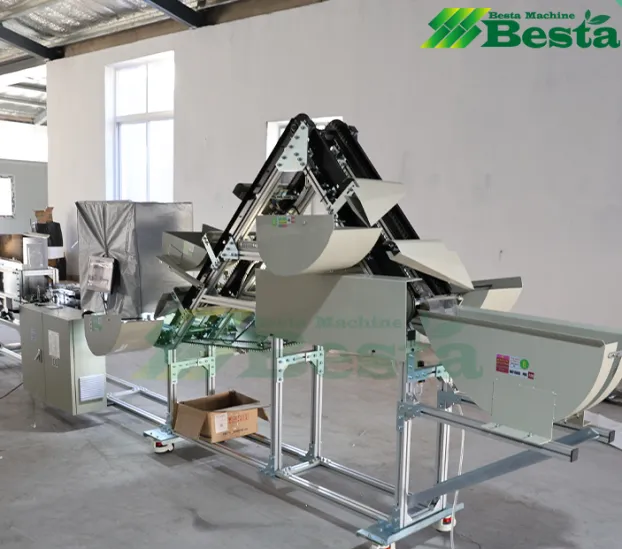
If you run a reed straw line, the sorting step often causes more trouble than people expect. On paper, it looks simple. In real production, it is where labor cost rises, defect misses show up, and shipment quality starts to drift. One worker may reject a straw for color variation, while another lets it pass. That kind of inconsistency gets expensive fast when your orders move from small batches to wholesale volume.
Besta Machine is a manufacturer focused on bamboo and wood processing machinery, with more than 20 years of experience, over 30 equipment patents, CE certifications, exports to 30+ countries, and service sections that cover OEM work, R&D, technical support, and after sales support. On its reed straw sorting page, the company presents a four camera visual sorting machine built for reed straws, with detection aimed at bent straws, surface and color issues, diameter variation, and two end defects. That profile makes the company relevant to buyers who care less about flashy claims and more about whether a machine can hold quality steady day after day.
Why Does Reed Straw Quality Control Matter in Large-Scale Production?
When output is low, manual checks can still keep things moving. Once your volume grows, though, small sorting errors start stacking up. A few bad bundles today can turn into a return, a complaint, or a delayed reorder next month. It is not dramatic, but it hurts.
Common Defects You Need to Catch
In reed straw production, the usual trouble spots are easy to name. Bent straws. Surface marks. Color inconsistency. Diameter problems. Poorly cut ends. These are not rare exceptions. They are daily issues, especially when raw material varies from lot to lot.
What Poor Sorting Costs You
If your sorting standard changes from shift to shift, you end up paying in ways that do not always show on one spreadsheet. Packing slows down. Reject rates go up. Customers notice mixed quality inside the same carton. And your team spends more time rechecking finished goods. That is why reed straw quality control matters so much in large-scale reed straw production.
What Happens in Manual Reed Straw Sorting?
Manual reed straw sorting still has a place. For a small workshop or an early-stage line, it is often the first workable option. You do not need a big setup. You just need people, tables, trays, and patience. Quite a lot of patience, really.
Where Manual Sorting Still Works
If your daily output is modest and your orders are not strict on grading, manual sorting can be enough. It is flexible. It is easy to start. And for factories still testing market demand, the lower entry cost may feel safer.
Where Manual Sorting Starts to Break Down
The problem comes when you try to scale. Manual vs automatic straw sorting becomes a serious business question once you depend on speed and consistency. Workers get tired. Inspection speed drops. Bent pieces and end defects get missed. You also become heavily dependent on labor availability, which is not a great position to be in when delivery dates are fixed.
What Makes an Automatic Reed Straw Sorting Machine Different?
An automatic reed straw sorting machine changes the job from hand judgment to rule-based inspection. That is the real shift. You are no longer asking people to make hundreds of tiny calls every minute. You are asking a machine to apply the same standard again and again.
How the Visual System Works
The machine shown by Besta Machine uses a four camera visual system, including upper and horizontal cameras. According to the product page, the upper camera mainly checks surface problems, while the system as a whole is used to detect bent straws, surface and color problems, diameter issues, and two end defects. The page also states an output of about 40,000 to 50,000 pieces per hour, and notes that sorting standards can be set according to the customer’s needs.
Why That Matters for You
If you are trying to reduce labor cost in reed straw production, speed alone is not enough. You need stable grading. A high-speed reed straw sorting machine helps because it does not get distracted, rush through the last hour of a shift, or change standards between operators. That makes machine vision straw sorting much more useful for large orders than many buyers first assume.
Which Option Is Better for Large-Scale Production?
This is the part most buyers care about. Not theory. Not nice language. Just the practical choice.
Choose Manual Sorting if Your Output Is Still Small
Manual reed straw sorting makes sense when your line is small, your budget is tight, and your customers accept wider variation. In that case, the extra labor may still cost less than buying equipment too early.
Choose Automation if You Need Stable Output
If your orders are growing, an automatic straw sorting machine is usually the better move. You get more consistent reed straw defect detection, faster flow, and less dependence on operator skill. On the official page, the company also notes that the machine is designed according to the customer’s product size and selecting requirements, and that an air compressor connection is needed before use. Those details matter because reed straw sorting automation only works well when it fits your actual line, not a generic one.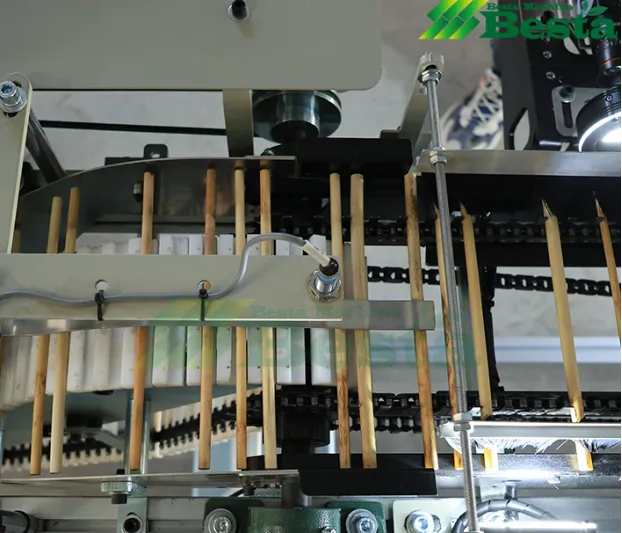
How Should You Decide?
A simple test helps. Ask yourself three things. Are labor costs rising? Are defects slipping through? Is your current sorting step slowing packing or shipment? If the answer is yes to two or more, you are probably ready to look at a reed straw sorting machine, not just add more people to the table. That is usually the point where how to sort reed straws automatically stops being a technical question and becomes a margin question.
FAQ
Q1: What is an automatic reed straw sorting machine?
A: It is a machine that uses cameras and set inspection rules to sort reed straws by quality, instead of relying only on hand checking.
Q2: Is manual reed straw sorting still useful?
A: Yes. It still fits small factories, pilot lines, and low-volume orders where output is limited and grading rules are less strict.
Q3: What defects can a machine vision straw sorting system detect?
A: Based on the product information cited above, common targets include bent straws, surface and color problems, diameter variation, and defects at both ends.
Q4: Can an automatic reed straw sorting machine reduce labor cost?
A: In many large-volume lines, yes. It cuts reliance on manual inspection and reduces the number of missed defects that lead to rework.
Q5: What should you check before buying one?
A: Look at defect detection range, hourly output, size matching for your straws, grading flexibility, support, and line requirements such as air supply and installation fit.


Hot Products | Sitemap | Special
Fully Automatic Wooden Spoon Fork Hot Pressing Machine , bamboo cutting machine price , Toothpick Precise Cutting Machine , automatic wood cutting machine , Fully automatic wooden spoon hot pressing machine , precise cutting machine