


 Home
HomeWhat Machines Are Included in a Wooden Tongue Depressor Stick Production Line
The making of wooden tongue depressor sticks needs a special wooden tongue depressor stick making machine line. This setup turns raw wood logs into clean, smooth, exact medical sticks. These throw-away items help doctors check mouths and throats. They need high exactness, cleanliness, and steady quality. A full wooden tongue depressor stick production line brings together many steps. It goes from raw wood prep to final packing and checks.
This piece looks at the main machines in a normal wooden tongue depressor stick manufacturing equipment setup. It covers what each does, how it fits the flow, and how it helps make good products.
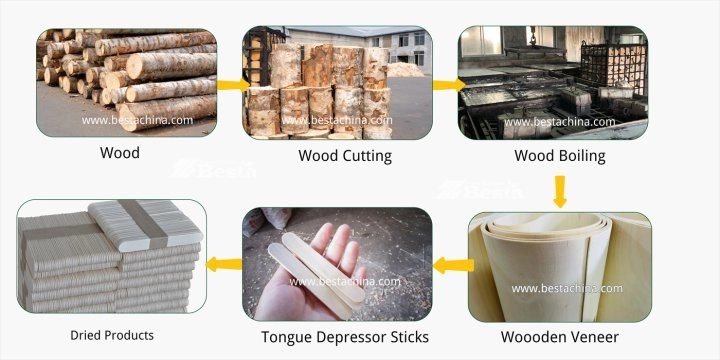
Wooden Tongue Depressor Stick Specifications and Material Selection
Most sticks measure 150 mm or 152 mm long. They have rounded ends and very smooth surfaces. This keeps patients safe and comfortable during checks. Northern white birch works best as raw material. Makers like it for its clean, splinter-free feel, no taste or smell, strong pull, and green supply. One normal birch tree can give tens of thousands of sticks. Poplar costs less in some cases. Still, birch stays the top pick for high-grade medical tongue depressors because of its better traits.
Stage 1: Raw Material Preparation – From Logs to Dried Sticks
The first part changes hardwood logs (usually birch or poplar) into dry, half-done sticks ready for next steps. It includes cutting, heat treatment, shaping, and moisture control. These steps make the wood easy to work and stop problems like splits or uneven thickness.
Wood Cutting Machines (e.g., AJD-2 Model)
The work starts with wood cutting machines. These slice big logs into even blocks or pieces of the same length. Even sizes matter a lot. They stop changes during peeling and cut waste. Fast saws give clean cuts. They ready logs for boiling without too much splinter or fiber harm.
Wood Boiling and Pre-Treatment Systems
Before rotary cutting, logs get boiled or steamed. This happens at 80–100°C for 3–4 hours. The heat softens wood fibers. It makes veneer bend better and helps take off bark. Steam boilers give steady heat. Special boiling tanks spread it evenly through the log. This key step lowers crack risk during peeling. It also makes the final product smoother.
Wood Rotary Cutting Machine (CNC Type, e.g., SK-520S Model)
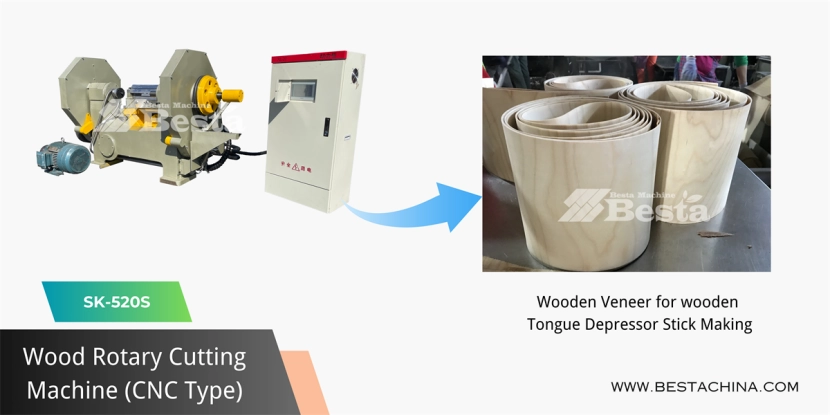
A main part of any wooden tongue depressor stick production line is the wood rotary cutting machine. This CNC gear peels soft logs into thin, ongoing wooden sheets. Thickness usually stays 1.5–2.5 mm. High-precision rotary work does it. Servo motors allow easy, exact thickness changes. Steady veneer from this step matters for even stick sizes. Good accuracy here helps later yield and overall quality.
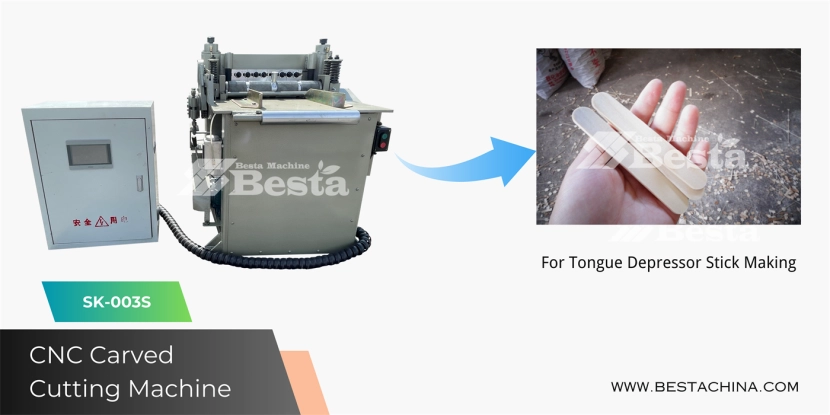
Carved Cutting Machine (CNC Type, e.g., SK-003S Model)
The next main step uses the carved cutting machine for tongue depressor stick punching. This CNC wooden tongue depressor stick carved cutting machine uses exact dies. It stamps or carves the veneer into single stick shapes. Length usually reaches 150 mm. It adds rounded ends and smooth lines. Advanced CNC gives exact forming, high output, and few flaws. After punching, sticks still hold some moisture. They need quick drying to keep shape and stop bending.
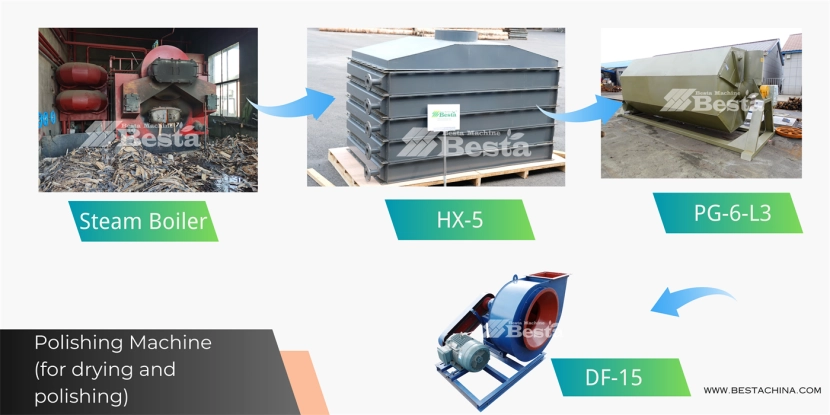
Polishing and Drying Systems (Including Heat Exchanger HX-5, Draught Fan DF-15, and Related Equipment)
After carving, sticks need full drying and first polishing. This drops moisture low to stop warping. It also clears rough surfaces. Matched systems include steam boilers for heat, the heat exchanger (e.g., HX-5) for good transfer to dry chambers or rotary dryers, and the draught fan (e.g., DF-15) for hot air flow and even drying. Polishing machines (e.g., PG-6-L3) use tumbling or drum methods to smooth early surfaces. Blade sharpening tools (e.g., BSM-010) keep cutting sharp all through the line. These parts work together. They stop germ growth, cracks, and surface flaws. They ready sticks for better finishing.
Stage 2: Refinement and Finishing – From Dried Sticks to Packaged Products
After drying, sticks go through many quality steps. These remove flaws, treat edges, and pack to meet strict medical rules. Smoothness, clean potential, and low flaws matter.
Order Arranging Machine (e.g., LS-150 Model)
The wooden tongue depressor stick order arranging machine lines up scattered dry sticks into neat rows, layers, or same directions. This auto step links drying to next picking work. It handles big amounts well and cuts hand labor a lot.
Primary Selecting Machine (e.g., FX-001E Model)
Quality checks start with the wooden tongue depressor stick selecting machine. This gear sorts out bad pieces. It catches bent, narrow, thin, cracked, or odd sticks. Vibrating or roller systems make sure only good ones move on. It drops waste and boosts line speed by finding clear flaws early.
Chamfering Machine (e.g., MQ-01SX Model)
The wooden tongue depressor stick chamfering machine rounds sharp edges and corners. This makes smooth, curved shapes. It stops mouth hurt and makes the stick feel better. Exact chamfering meets medical rules and quality needs.
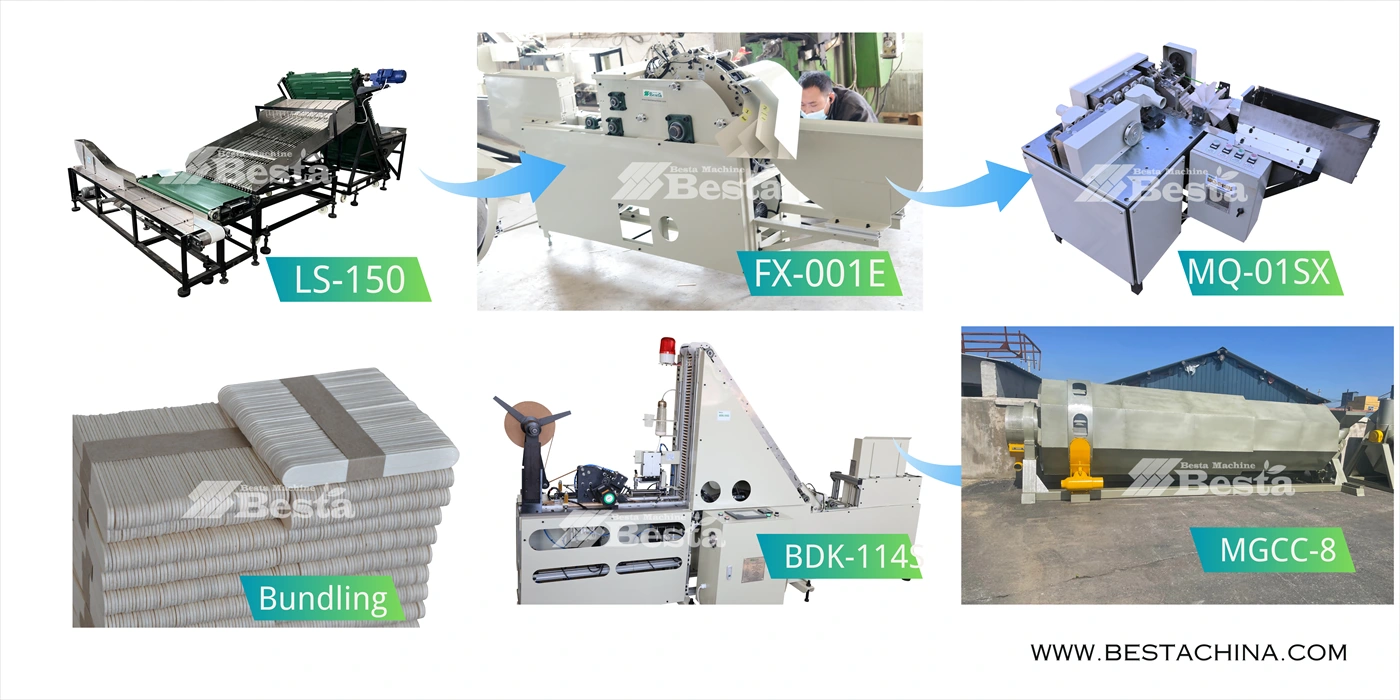
Dust Removing and Further Polishing Machine (e.g., MGCC-8 Model)
Surface finish comes from the dust removing and further polishing machine. This tool clears leftover dust, tiny bits, and small burrs. It gives a final smooth, shiny look through rubbing and air blow. The step matters for clean feel, nice look, and touch needed in medical items.
Visual Selection Machine (e.g., SJXJ-4C Model with Four Cameras)
For top or strict medical needs, advanced visual selection machines use many high-clear cameras. They check sticks for small flaws like color changes, spots, tiny cracks, or size differences. Auto optical sorting throws out bad ones. This keeps very even quality in high-end wooden tongue depressor stick making machine work.
Bundling and Packing Machines (e.g., BDK-114S Model and Individual Packing Types)
Final steps use the wooden tongue depressor stick bundling machine. It groups sticks into firm, tied bundles (e.g., 100 per bundle). Based on market needs, individual or bulk tongue depressor stick packing machines add safe wrapping—often four-side seal—for clean hold during store, move, and send. Extra laser marks or prints can add lot numbers, dates, or logos for tracking.
Maintenance and Supporting Equipment for Long-Term Reliability
Steady, ongoing work needs extra tools. These include carved cutting blade grinding machines (with four-side sharpening), white based board planing machines for die care, and special blade tip grinders (e.g., MDJ-03). Regular sharpening and setup stop stoppages. They keep exactness in big runs.
Why Precision and Hygiene Matter in Wooden Tongue Depressor Stick Manufacturing Equipment
Each machine helps meet tough medical rules. Splinter-free surfaces, even sizes, rounded edges, right moisture, and few flaws matter. CNC in rotary and carved cutting machines raises repeat work, speed, and exactness. Heat drying and polishing cut germ risks well. Step-by-step picking—mechanical plus visual—drops bad pieces below normal levels. Green birch use and good waste handling (e.g., chips to pellets) fit earth-friendly ways. A good wooden tongue depressor stick production line mixes auto work, quality checks, and output to give safe, steady products.
FAQ
What is the typical length of wooden tongue depressor sticks produced by these machines?
Most lines produce sticks around 150 mm (or 152 mm), the standard size for medical use.
Why is CNC technology important in the rotary cutting and carved cutting machines?
CNC ensures precise thickness control, accurate shaping, and high consistency, reducing material waste and improving product quality.
How does the drying process work in the production line?
It combines steam boilers, heat exchangers, and draught fans to circulate hot air evenly in rotary or chamber dryers, while integrated polishing removes surface imperfections.
What role do selecting machines play?
Primary mechanical selection removes obvious defects; advanced visual systems with cameras detect subtle flaws for premium-grade output.
Can the line be customized for different packaging needs?
Yes, bundling machines handle grouped packs, and individual packing options support sterile, single-unit wrapping as required.
Ready to Start Your Wooden Tongue Depressor Stick Production Project?
If you're planning to invest in a reliable wooden tongue depressor stick making machine line or need expert guidance on wooden tongue depressor stick manufacturing equipment, Besta Machine offers comprehensive solutions, including whole package plans, catalogs, price lists, and working videos.
Contact Besta Machine today for detailed project proposals and customized support. Phone: +86 186 5710 6860 Email: angel@bestachina.com
Let our expertise help turn your vision into efficient, high-quality production. Reach out now!


Hot Products | Sitemap | Special
bamboo cutting machine price , Fully automatic wooden spoon hot pressing machine , precision wood cutting machine , Wooden Ice Cream Stick Carved Cutting Machine , Fully Automatic Wooden Spoon Fork Hot Pressing Machine , Toothpick Precise Cutting Machine