


 Home
HomeFully Automatic Bamboo Spoon and Fork Making Machine Line for Eco-Friendly Cutlery
The Fully Automatic Bamboo Spoon and Fork Making Machine Line for Eco-Friendly Cutlery serves as a modern choice for green production. It changes renewable bamboo into fine, break-down disposable tools with good speed. As world limits on one-time plastics grow, bamboo spoon fork making machine line setups(disposable bamboo cutlery production lines, and automatic bamboo utensil manufacturing equipment) help makers meet the rising call for earth-friendly picks in food service, events, and packaging areas.
Bamboo shows strong points. It reaches full growth in only 3–5 years. It needs no replanting. And it grows well with small amounts of care. These traits place it much better than plastic or slow-growing wood for disposable cutlery. Complete lines handle the full process on their own. They cut down on labor costs. At the same time, they guarantee even, safe-for-food results that work for large-scale uses.
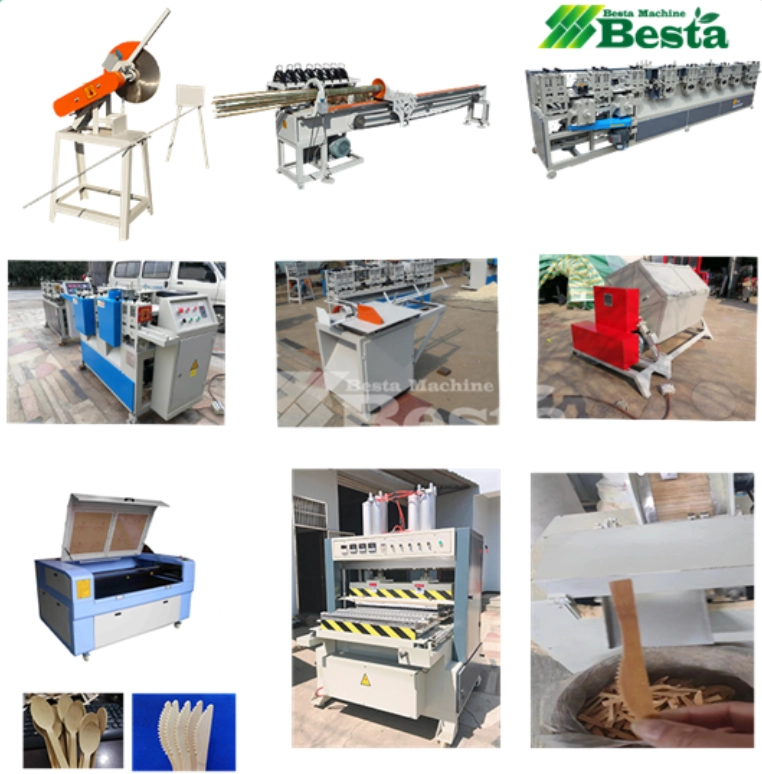
Understanding the Bamboo Spoon Fork Making Machine Line Process
The making order is built for exactness, small waste, and room to grow.
Raw Material Preparation: Sawing and Splitting
Full-grown bamboo stems get handled first with the ZG-1 Raw Bamboo Sawing Machine. This machine provides exact, matching cuts. They set standard lengths. And they make handling easier.
The next step is side splitting with the ZP-2500 or ZP-1650G Bamboo Splitting Machine. It uses setups with several blades. These create steady thin sections. The tool handles natural changes in width. And it lays the base for quality strips.
Strip Refinement: Planing, Milling, and Layering
The MBXD-10B Four-Side Bamboo Strip Planing Machine (Elementary Bamboo Strip Planing Machine) clears outer flaws on each of the four sides. It produces smooth, square strips with true shapes.
Further smoothing comes next with the JXFQ-2 Bamboo Strip Fine Milling and Layering Machine. This tool reaches fine levels of thick and wide control. It also uses layering methods. These increase closeness and hold power. Such features are key for tools that handle use without breaking apart.
Pre-Forming Treatments: Boiling and Material Conditioning
Strips often get boiled before forming. This pulls out starches, sugars, and possible bugs. It improves ease of machine work, bend ability, and cleanliness. A managed water soak comes before hot pressing. This avoids breaks. And it supports even shaping.
Shaping and Forming: Cutting and Specialized Processing
Smoothed strips turn into exact pieces through the BJQ-1 Precise Cutting Machine.
Detailed outlining uses the YC-1610-4 Four-head Laser Cutting Machine. It creates very sharp, clean edges. Waste stays very low. And it allows comfortable, made-to-order grip patterns.
Work just for forks involves the KCJ-1S Bamboo Fork Teeth Making Machine. This forms evenly placed, useful prongs.
Knife making includes the Bamboo Knife Edge Sharpening Machine. It provides safe, long-lasting edges.
Final Shaping and Finishing: Hot Pressing and Optional Enhancements
Main shaping takes place in the RYJ-1S Bamboo Spoon Hot Pressing Machine. There, set heat and force shape spoon pieces. They press fibers for better stiffness. And they add a smooth, pleasing surface.
Extra robot entry and exit parts allow smooth material flow. They lead to full no-touch running. Tool care through the XMD-02 Blade Sharpening Machine keeps cutting accuracy over long periods.
Key Advantages of Fully Automatic Bamboo Spoon and Fork Making Machine Line Systems
These Fully Automatic Bamboo Spoon and Fork Making Machine Line Systems offer many benefits:
- Sustainability — Quick bamboo renewal paired with low-waste methods creates fully compostable items that decay in nature, reducing waste sites and sea harm.
- Efficiency — Auto features improve output speed, cut person mistakes, and allow ongoing work with steady quality.
- Quality Control — Exact parts ensure matching sizes, no-break surfaces, and dependable build strength.
- Versatility — Flexible setups handle spoons, forks, knives, and special forms through changeable molds and laser settings.
- Scalability — From small start amounts to factory-level output, lines fit various business scales.
Production Capacity and Performance Metrics
Current disposable bamboo cutlery production lines reach solid outputs based on setup, mold number, and material details. Hot pressing parts often hit 4,000–15,000 pieces per hour. Full lines back tens of thousands each day. Things that affect capacity cover bamboo strip quality, pressing cycle time (usually 15–30 seconds per group), and multi-mold plans (for example, 4–8 molds). Strong models stress power-saving motors and fast tool swaps for little stop time between item batches.

Ensuring Food Safety and Compliance in Bamboo Utensil Manufacturing
Safety for food contact stays most important. Pure bamboo, handled in standard ways (boiling, natural drying), brings no chemical shift dangers. It follows rules for direct food contact. Main steps include:
- Full removal of starch and sugar in boiling to block germ spread.
- Steering clear of bad glues, varnishes, or man-made covers.
- Firm cleanliness rules across making to reach world standards (such as FDA-matched or similar food-grade needs).
- Routine checks for shift of any left traces, making sure no formaldehyde or other bad items go beyond safe levels.
Auto lines improve steadiness. They do this by cutting hand work and dirt spots. Thus, they create break-proof, smooth tools fit for hot or cold foods with no release.
Market Applications and End-Use Benefits
Complete products do well in varied settings:
- Food Service and Catering — Tough but light for events, restaurants, and delivery.
- Retail and Packaging — Pleasing, marked choices for green-minded buyers.
- Outdoor and Travel — Break-down ease that matches no-trace ideas.
Bamboo cutlery beats plastic in heat hold, less breaks, and natural looks. It also tops regular wood in power and evenness.
FAQ
What is the main raw material for a bamboo spoon fork making machine line?
Mature bamboo culms, selected for rapid renewability and inherent strength.
How does the process differ for spoons versus forks?
Spoons emphasize hot pressing for curvature; forks require dedicated teeth forming. Upstream splitting, planing, and cutting remain shared.
Is the line fully automatic?
Core operations are fully automated, with robotics optional for near-complete hands-off flow.
What makes bamboo cutlery eco-friendly?
Fast growth without chemicals, natural biodegradation, and minimal production impact provide a responsible plastic substitute.
How does capacity scale in these lines?
Outputs range from thousands to tens of thousands of pieces daily, driven by mold count and cycle efficiency.
Why prioritize food safety in production?
Traditional processing ensures no harmful migration, meeting global standards for safe, direct food contact.
Launch Your Sustainable Cutlery Manufacturing Project Today
Ready to invest in a fully automatic bamboo spoon and fork making machine line for eco-friendly cutlery? Work with experienced experts in bamboo processing technology for custom, reliable answers.
Besta Machine is a leading manufacturer and supplier with over 20 years of specialized experience in bamboo and wood processing machinery.
The company does well in providing full, good-quality production lines for many green products. These include bamboo toothpick making machines, bamboo chopstick production systems, bamboo BBQ skewer and stick equipment, bamboo flooring and furniture board lines, wooden ice cream stick machines, disposable wooden spoon/fork/knife setups, cotton bud manufacturing solutions, incense stick production machinery, and associated packaging equipment.
Known for new ideas, strong technology, and dependable work, Besta Machine offers full project help. This goes from first plan layout and machine suggestions to setup, worker training, and continued technical support. It aids clients around the world in setting up effective, earth-focused factories.
Contact directly for full technical talks: Phone: +8618657106860 Email: angel@bestachina.com
Link today to look at custom setups matched to output goals. And move ahead to effective, earth-caring cutlery production that meets the increasing need for green one-time items.


Hot Products | Sitemap | Special
Toothpick Precise Cutting Machine , Fully automatic wooden spoon hot pressing machine , automatic stick cutting machine , automatic wood cutting machine , Fully Automatic Wooden Spoon Fork Hot Pressing Machine , bamboo cutting machine price