


 Home
HomeHow to Reduce Burrs in Disposable Wooden Chopsticks

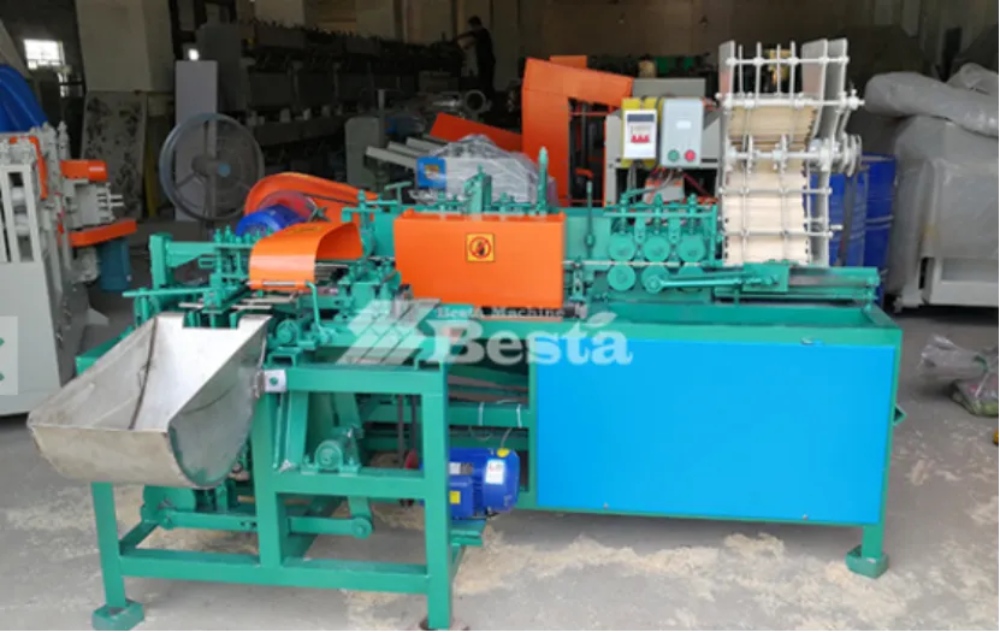
Disposable wooden chopsticks quality control matters long before the product reaches a bag or a carton. If a pair feels rough, sheds a tiny splinter, or breaks to one side, the customer does not care which step went wrong. The complaint still lands on your desk. If you are asking how to reduce burrs and splinters in disposable wooden chopstick production, the answer usually starts with raw wood, moisture, blade condition, and the twin connection, then moves through the full line instead of one single fix. A wooden double chopsticks forming and sharpening machine sits right in the middle of that chain, where shape and tip quality are decided.
Why Does Disposable Wooden Chopsticks Quality Control Matter?
You do not lose orders only because of major breakage. Small surface flaws do damage too. In foodservice, rough edges make people hesitate. In export business, one bad batch can turn into returns, photos from buyers, and a lot of awkward emails.
Complaints Start With Small Surface Flaws
Many disposable wooden chopsticks defects look minor at first. A fuzzy edge near the tip. A chipped shoulder. A pair that separates with a harsh crack instead of a clean split. That dry, sharp snap is not a great sign. It often means the product already feels brittle in the hand.
Surface Problems Usually Mean Process Problems
A recent industry article on twinned chopsticks points out that splintering and uneven breakage often come from irregular cut geometry, moisture drift, and fiber damage rather than “customer misuse.” That idea matters for wooden chopstick quality control too. If the cut is off, polishing alone will not save the batch.
What Causes Disposable Wooden Chopsticks Defects?
Most factories first blame the last machine. That is common, but it is usually incomplete. The wooden chopsticks splinter problem often starts earlier, sometimes with the strip itself.
Raw Wood and Moisture Set the Tone
If grain runs unevenly, or the strip is too dry, fibers tear more easily during shaping and sharpening. The same reference page notes that low moisture makes fibers dry, hard, and brittle, while excess moisture can bring deformation and mildew. That is why how to prevent splinters on wooden chopsticks begins with stable material, not just cleaner finishing.
Blade Wear and Feeding Speed Change the Cut
Dull blades do not really cut cleanly. They scrape and lift fibers. The uploaded machine sheet and the product page both show that this model combines forming and sharpening, with 4.05 KW power, 60 to 80 pairs per minute, a forming spindle speed of 18000 R/Min, and a sharpening spindle speed of 7600 R/Min. When speed is pushed but blades are tired, chopstick surface quality usually tells on you fast.
The Twin Connection Can Trigger One-Side Tearing
Twinned wooden chopsticks separation force is easy to overlook. Yet the reference article makes a useful point: if the notch is not symmetrical and smooth, force gathers on one side and tears fibers during separation. That is exactly why customers ask why one stick looks neat while the other looks chewed up.
How Can You Reduce Burrs on Wooden Chopsticks?
If you want a practical answer to how to reduce burrs on wooden chopsticks, keep it simple. Fix the line in the same order the material moves.
Control Moisture Before You Chase the Surface
Check incoming strips, then recheck after storage. If a batch feels overly dry and breaks with a crisp sound, stop and look closer. That quick floor habit is not fancy, but it works.
Check Blades Before the Product Forces You To
Set a routine for blade inspection and replacement. Do not wait for the first complaint photo. A single hour of running with worn edges can leave a long tail of rework.
Clean Up Dust at the Right Point
Dust and loose fiber still matter after cutting. On the company site, the broader wooden chopstick production line includes polishing, drying, angle milling, quality selecting, and packing after earlier cutting steps. That is the right way to think about wooden chopstick production quality. A cleaner surface comes from sequence, not luck.
Which Equipment Setup Helps Your Line Stay Stable?
This is also where supplier choice starts to matter. Not in a flashy way. Just in whether the machine builder actually speaks the language of process control.
A Process-Focused Supplier Makes a Difference
Besta Machine fits that profile better than many catalog-only sellers. The company says it has over 20 years of experience, more than 30 patents and CE certifications, exports to more than 30 countries, and offers technical support for installation, troubleshooting, and ongoing operation. For a buyer, that matters because a wooden chopstick forming and sharpening machine is not a standalone purchase. It is part of a line that has to run day after day without drifting all over the place.
One Unit Can Cut Variation Between Two Key Steps
The uploaded spec sheet describes the CXXJ-2 as a wooden double chopsticks forming and sharpening machine used to form wooden strips into twin chopsticks and sharpen the ends in one machine. That kind of setup can reduce handoff error between shaping and tip work. If you also have access to solid technical support, you are in a much better position to catch drift early and keep disposable wooden chopsticks quality control steady.
FAQ
Q1: What causes splinters on disposable wooden chopsticks?
A: The most common causes are unstable moisture, poor grain quality, worn blades, and an uneven twin connection that tears fibers during separation.
Q2: How to inspect disposable wooden chopsticks?
A: Check the tip, side edge, and twin connection by eye and by touch. Then do a quick separation test on random pairs from each batch.
Q3: Why do wooden chopsticks break unevenly?
A: In many cases, twinned wooden chopsticks separation force is not balanced. One side carries more load because the notch is not cut evenly.
Q4: Can polishing alone fix the wooden chopsticks splinter problem?
A: Not usually. Polishing can clean loose dust, but it cannot fully correct bad material, bad moisture, or a rough cut.
Q5: What is the best way to improve disposable wooden chopsticks quality control?
A: Start with better raw strips, keep moisture in a workable range, inspect blades on time, and treat forming, sharpening, cleaning, and final checks as one connected process.


Hot Products | Sitemap | Special
manual bamboo splitting machine , Fully Automatic Wooden Spoon Fork Hot Pressing Machine , bamboo stick making machine price , Toothpick Polishing machine Bamboo processing machine , strip setting machine , small layering machine