


 Home
HomeWooden Fork Teeth Making Machine Daily Output
For a disposable wooden fork factory, daily output is not just a nice number on a catalog. It affects your order schedule, labor cost, packing speed, and even how much space you need around the production line. A wooden fork teeth making machine output should be judged by real shift production, not only short test speed.
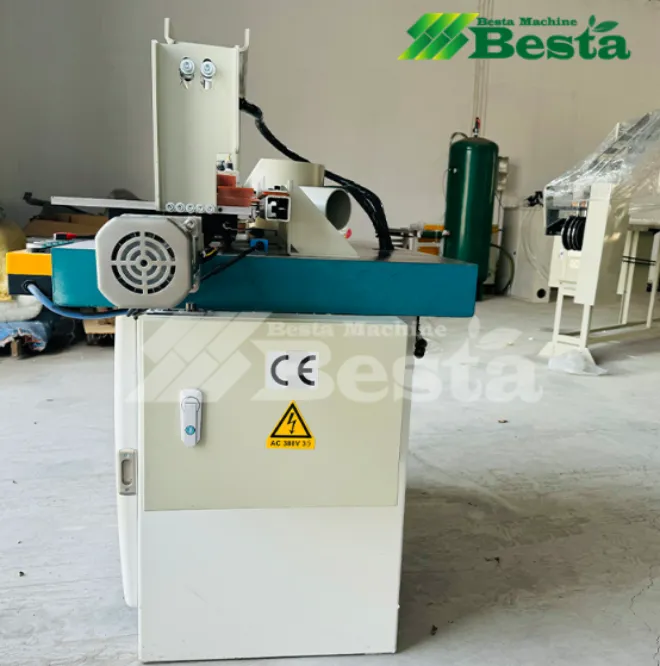
The KCJ-1S Wooden Fork Teeth Making Machine from Besta Machine is designed for wooden fork teeth making. Its rated output is 100,000 to 130,000 pcs per 8 hours, with 380V, 50HZ working voltage, compact machine size of 1350×750×1200mm, and 400kg machine weight. For many buyers, that means one machine can already support serious batch production.
What Is the Daily Output of a Wooden Fork Teeth Making Machine?
Daily output depends on your shift length. If you run one standard 8-hour shift, the KCJ-1S can produce about 100,000 to 130,000 pcs per 8 hours. That is the key figure for your wooden fork making machine capacity plan.
Standard 8-Hour Output
In one 8-hour shift, you can plan around 100,000 to 130,000 wooden fork pieces. Per hour, that equals roughly 12,500 to 16,250 pcs. In real workshops, the lower number is often safer for early-stage planning. After operators get used to feeding, checking, and collecting, the higher range becomes more realistic.
For small and medium factories, this output level is useful. It can support daily wholesale orders, foodservice packaging demand, and export trial orders without needing a very large machine footprint.
Why Does Wooden Fork Machine Output Matter for Factory Buyers?
When you ask about how many wooden forks can a machine produce per day, the real concern is usually delivery risk. Can the line finish today’s order? Can packing keep up? Will one worker be stuck clearing piles of semi-finished forks? These are normal factory questions, and they are worth asking before purchase.
Output Affects Unit Cost
Higher output can lower the wooden fork production cost per piece because labor, power, and floor space are spread across more products. But speed alone is not enough. If the front process cannot supply semi-finished forks, the machine will wait. If the back process cannot collect and pack fast enough, finished forks will pile up. That sounds small, but it can ruin a shift.
A stable wooden fork machine output per shift is more useful than a short high-speed run. Factory buyers should look at continuous output, worker arrangement, and product quality together.
How Many Workers Are Needed to Run a Wooden Fork Teeth Making Machine?
A wooden fork teeth making machine does not need a large team, but it does need steady material handling. You should not only count the machine operator. Count the person who prepares semi-finished forks, moves trays, checks pieces, and keeps the area clean. A small mess around the machine can slow the shift more than people expect.
Basic Labor Arrangement
For one machine, one trained operator may handle basic running, feeding, and watching the machine. During high-output production, one helper can make work smoother, especially when semi-finished forks need frequent moving or sorting.
The best setup depends on your workshop flow. If semi-finished forks arrive in neat batches, labor is lighter. If workers need to sort mixed pieces before feeding, the daily output drops. This is why wooden fork factory production planning should include people, not just machines.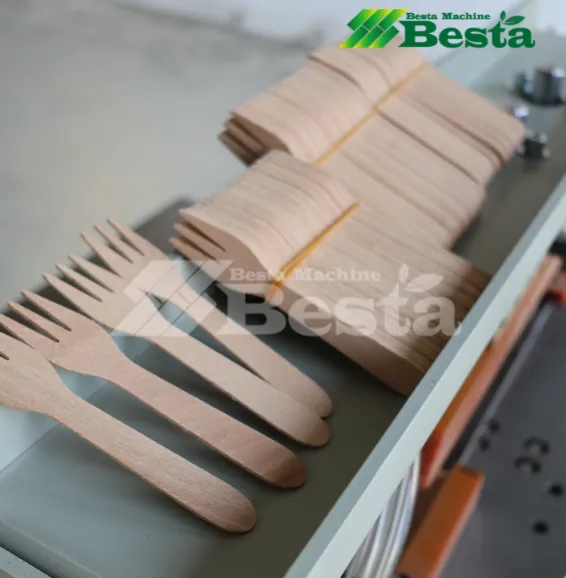
What Factors Can Reduce the Real Output of a Wooden Fork Teeth Making Machine?
The rated capacity gives you a target. The actual number comes from daily details. A fork with poor shape, high moisture, or rough edges may slow feeding. A worn tool may still cut, but the teeth look less clean. Then someone must recheck the batch. Nobody likes that part, but it happens in real production.
Material Supply and Fork Quality
The upstream process should prepare enough semi-finished wooden forks before each shift. Size should be stable. Surface quality should be acceptable. If pieces are bent, cracked, or mixed by specification, your disposable wooden fork production capacity will fall.
Tool Wear and Maintenance
The teeth forming area should be checked regularly. Wood chips, dust, loose parts, or dull cutting components may reduce output. A simple daily checklist helps: clean after the shift, check abnormal noise, inspect cutting parts, and record downtime reasons.
How Should You Match the Machine with the Production Line?
A high-output machine works best when the full line can move at the same rhythm. The wooden cutlery production line should not have one fast step and several slow steps. That creates waiting, piles, and extra handling.
Upstream and Downstream Matching
Before using the KCJ-1S Wooden Fork Teeth Making Machine, make sure the previous steps can supply enough semi-finished forks. After teeth forming, collection, inspection, counting, and packing should also be ready.
If your wooden fork production line output target is 200,000 pcs per day, a two-shift plan may work. If the target is much higher every day, you may need more than one machine, better material handling, or a faster packing setup.
Why Is KCJ-1S Suitable for High-Output Wooden Fork Production?
For buyers comparing a high output wooden fork teeth making machine, KCJ-1S gives clear data. It is built for wooden fork teeth making, works with 380V 50HZ power, and supports about 100,000 to 130,000 pcs per 8 hours. Its machine size, 1350×750×1200mm, is also practical for many workshops.
A Practical Choice for Mass Production
Besta Machine focuses on bamboo and wood processing machinery, including toothpick, chopstick, skewer, wooden cutlery, and related production equipment. With over 20 years of industry work, 30+ equipment patents, CE certifications, and export experience in 30+ countries, the company is not just selling one machine.
It helps buyers think through the full production process, from equipment matching to pre-sales advice and after-sales support. For a new wooden cutlery project, that kind of process experience matters because the hardest problems often appear after the machine arrives.
For factories needing a wooden fork manufacturing machine for mass production, KCJ-1S is suitable when your main concern is stable teeth forming output, compact layout, and daily batch production.
FAQ
Q1: How many wooden forks can a machine produce per day?
A: One KCJ-1S machine can produce about 100,000 to 130,000 pcs per 8 hours. If you run two shifts, the estimated daily output can reach about 200,000 to 260,000 pcs, depending on material supply and labor flow.
Q2: What is the output of KCJ-1S Wooden Fork Teeth Making Machine?
A: The KCJ-1S Wooden Fork Teeth Making Machine has an output of about 100,000 to 130,000 pcs per 8 working hours.
Q3: What affects wooden fork making machine capacity?
A: Main factors include semi-finished fork quality, feeding speed, tool condition, operator skill, workshop layout, and packing speed.
Q4: Is one wooden fork teeth making machine enough for a new factory?
A: For many small and medium factories, one machine is enough for initial production. If your long-term order volume is much higher, you may need two machines or a better-matched production line.
Q5: How can factories improve disposable wooden fork production capacity?
A: Prepare enough semi-finished forks before each shift, train operators, keep the machine clean, check cutting parts often, and record hourly output. Small habits like these can make daily production much steadier.


Hot Products | Sitemap | Special
Toothpick Precise Cutting Machine , toothpick making machine Bamboo Sawing Machine , strip setting machine , bamboo strip laying machine , bamboo cutting machine , bamboo splitting machine